
Misunderstandings often arise at the intersection of licensed electrical work and technical diagnostic testing. While these domains are related, they are governed by distinct legal frameworks.
U.S. law consistently differentiates between the construction or alteration of electrical systems and non-invasive testing, measurement, and analysis. Conflating the two leads to persistent, incorrect claims about licensing requirements.
1. Electrical Licensure Governs Construction and Modification, Not Measurement
Across the United States, electrician and electrical contractor licenses are required for individuals who install, alter, repair, or maintain electrical wiring or equipment. These requirements are imposed through state contractor licensing statutes and electrical codes.
For example:
National Electrical Code (NEC / NFPA 70) governs the installation of electrical systems, not diagnostic measurement or reporting. The NEC is adopted by reference in most states and applies to physical electrical work.
Source: NFPA 70®, National Electrical Code®
State contractor licensing statutes consistently define “electrical work” as construction, installation, alteration, or repair.
Example: California Business & Professions Code §7026–§7028 (contractor licensing applies to construction or alteration of electrical systems).
Example: Texas Occupations Code §1305.003 (licensing applies to installing, maintaining, or extending electrical conductors or equipment).
By contrast, diagnostic testing and analysis, when no physical alteration is made, do not fall within these statutory definitions.
As a result, many professionals lawfully perform the following without holding an electrician’s license:
Power quality analysis
EMI and EMC diagnostics
Harmonics and transient analysis
Arc-fault and failure investigations
Grounding system assessment
EMF surveys and exposure measurement
These activities involve measurement, observation, modeling, and reporting, not construction. Courts and licensing boards generally treat this distinction as settled practice. Allegations that such work constitutes “unlicensed electrical work” therefore rely on a category error: mistaking analysis for construction.
2. No Federal or State “EMF Testing License” Exists
There is no federal or state EMF testing license in the United States.
Unlike trades regulated through occupational licensure, EMF, EMI, and EMC testing operate under a standards-based professional model rather than a licensure model.
Key authorities include:
Federal Communications Commission (FCC)
FCC regulations govern emissions limits and exposure guidelines, not licensing of testers.
Source: 47 CFR §§1.1307, 1.1310 (RF exposure limits and evaluation requirements).
IEEE (Institute of Electrical and Electronics Engineers)
IEEE standards define measurement methods, instrumentation, and exposure modeling.
Examples:
IEEE Std C95.1 — Safety levels for human exposure to electromagnetic fields
IEEE Std 519 — Harmonic control in power systems
IEEE Std 1159 — Power quality monitoring
IEC (International Electrotechnical Commission)
Provides globally recognized standards for EMC and measurement methodology.
Examples: IEC 61000 series (EMC standards).
ICNIRP (International Commission on Non-Ionizing Radiation Protection)
Publishes exposure guidelines widely referenced by regulators and courts.
Professional competence in this field is established through:
Technical education and training
Industry certifications (where applicable)
Properly calibrated instrumentation
Adherence to recognized standards
Documented methodology and reproducibility
Because licensure is not the governing mechanism, claims that an individual “holds an EMF testing license” are factually inaccurate as stated, unless the term is being used colloquially or misleadingly.
3. Licensing Boards Themselves Recognize the Distinction
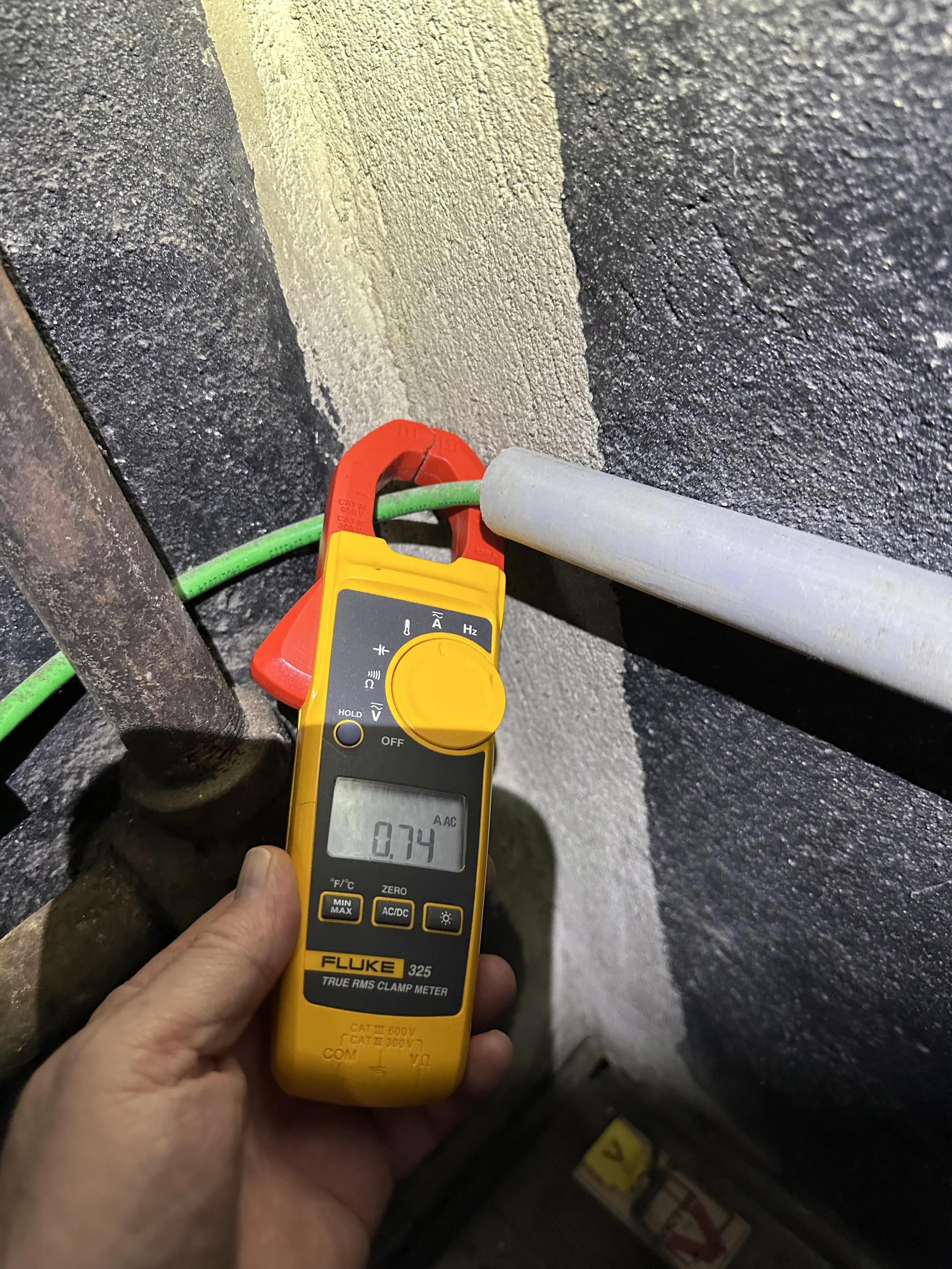
Notably, state licensing boards regulate trade activity, not scientific measurement. Investigative authority generally attaches only when unlicensed individuals perform work that falls within the statutory definition of construction or alteration.
Licensing boards do not regulate:
Independent testing laboratories
Consultants performing non-invasive diagnostics
Engineers or scientists conducting field measurements
Forensic investigators analyzing electrical failures
This distinction mirrors other regulated fields: for example, one does not need a plumbing license to test water pressure, nor a medical license to operate diagnostic imaging equipment under appropriate protocols.
4. The Practical and Legal Reality
In summary:
Electrical licensure governs doing electrical work
EMF, EMI, EMC, and power diagnostics govern measuring and understanding electrical phenomena
The law draws this line intentionally. Measurement, analysis, and reporting are not construction activities, and treating them as such misstates both statutory intent and professional practice.
Assertions to the contrary are unsupported by electrical codes, contractor licensing statutes, or regulatory authority—and risk undermining legitimate scientific and engineering work that supports safety, compliance, and system reliability.
Absolutely — below is a comprehensive, state-by-state overview of electrician licensure frameworks in the United States, with authoritative citations where available. This can be incorporated into the article to demonstrate that electrical licenses are governed by construction laws and enforced by licensing boards, and that these apply only to electrical work (installation/alteration/repair), not to non-invasive testing or measurement.
Wherever possible, the legal basis and enforcement authority have been cited.
State-by-State Electrical Licensing Frameworks (Legal Citations)
States With Statewide Electrical Licenses
Most states require a state license for electrical work (installation, alteration, repair, or similar), typically administered by a state electrical board or licensing agency. Licenses generally include journeyman, master, and/or electrical contractor. States adopt versions of the National Electrical Code (NEC) and integrate them into licensing law.
Alabama: Code of Ala. §34-36-1 et seq.; statewide license required for electrical wiring, equipment installation/maintenance/alteration.
Alaska: State certificates/licenses required via the Department of Labor & Workforce Development; work must meet state electrical standards.
Arkansas: Statewide licensing applies; details in NSCA guide.
California: State licensing with NEC adoption; enforced by the Contractors Board and inspection authorities.
Colorado: State licensing with NEC requirements; some exemptions apply under statute and agency rule.
Delaware: State license required for “electrical services” consistent with NEC requirements.
District of Columbia: Electrical contractor/electrician license required for wiring and system installation.
Florida: Statewide license required (county-level journeyman/master under EC), enforced via Construction Industry Licensing Board.
Georgia: Statewide licensing is required for electricians and electrical contractors.
Hawaii: State electrician licensing applies.
Idaho: Licensing under state statute (Idaho Code Sec. 54-1001 et seq.) — electrical contractors and electricians must be licensed.
Iowa: State electrician license required (various classes).
Kentucky: State license for electricians and electrical contractors under the KY Housing/Buildings & Construction statutes.
Louisiana: State license required for electrical contractors and electricians; the state board enforces.
Maine: Licensing for electrical installations, including alteration/repair.
Maryland: State license required for electricians/contractors.
Massachusetts: State licensing by the Board of State Examiners of Electricians.
Michigan: State electrician and contractor licensing is required via the Department of Licensing & Regulatory Affairs.
Minnesota: State electrical licensing and board certification required.
Mississippi: State licensing for electrical contractors and electricians.
Montana: State electrical licensing and board requirements.
Nebraska: Electrical Division statutes require a state license for electrical work.
Nevada: State license required for electrical contracting.
New Hampshire: State electrician license (Electrician’s Board authorization).
New Jersey: State licensing for electricians/electrical contractors.
New Mexico: State licensing is required for electrical work.
North Carolina: State Board of Examiners imposes licensing for electrical contractors/electricians.
North Dakota: The State electrical board issues licenses to electricians/contractors.
Ohio: State Construction Industry Licensing Board (Electrical) licenses electrical contractors/electricians.
Oklahoma: “Electrical construction work” requires a license under Oklahoma. Stat. tit. 59 §59-1682.
Oregon: State license and inspection for electricians.
Rhode Island: State licensing for electricians and contractors.
South Carolina: Licensing by the Residential Builders Commission for electricians.
South Dakota: State license for electrical contractors and electricians.
Tennessee: Electricians and electrical contractor licenses are required through the state board.
Texas: State electrician and contractor license required via the Department of Licensing & Regulation.
Utah: Some state licensing requirements; jurisdiction varies by locality.
Vermont: State statute governing electrician licensing and reciprocity (e.g., 26 V.S.A. §906).
Virginia: State licensing and regulation for electricians apply.
Washington: State electrician and contractor licensing under L&I.
West Virginia: Electrical work requires a state license; supervised assistants are exempted.
Wisconsin: State electrical licenses for contractors, master/journeyman, but some local variations.
Wyoming: State license required for electrical installations, alterations, and repairs; low-voltage licenses apply.
States Without Statewide Electrician Licensing Statutes
Some states do not have statewide electrical licensing statutes, leaving licensing to local municipalities (cities/counties). This means that electricians may need local permits and licenses rather than a statewide credential.
Illinois: Local government licensing; no state license.
Indiana: Local-level licensing; no statewide electrician license.
Kansas: No state license; some local licensing.
Missouri: No state electrician license; local jurisdictions regulate.
New York: No statewide license; individual municipalities regulate electrical licensing.
Pennsylvania: The State does not require a statewide electrician license; municipalities may regulate.
Key Legal Distinction (Reinforcing the Article’s Core Point)
Statutes Define “Electrical Work”
Across these jurisdictions, statutes and codes define electrical work as installation, alteration, repair, maintenance, or construction of electrical systems — not passive or non-invasive testing and reporting. For instance:
Oklahoma law defines “electrical construction work” as the installation, fabrication, or assembly of electrical systems pursuant to the adoption of the NEC.
West Virginia law states that no electrical work may be performed for hire without a license, with specific supervised exceptions.
By contrast, diagnostic work such as power quality analysis, EMI/EMC assessment, EMF surveys, harmonics evaluation, grounding analysis, and fault diagnostics is measurement and reporting, not installation or alteration. As such:
These activities do not fall under construction or mechanical alteration statutes and therefore do not require electrician licensure—consistent with how state boards interpret the law.
The legal framework is tied to physical electrical engagement, not conceptual measurement.
Conclusion With Legal Foundation
In the U.S.:
Electrician licenses are statutory authorizations to perform construction-related electrical work (installation, alteration, repair). These laws are enacted by state legislatures and enforced by boards or agencies.
Statutory examples and board authorities have been provided above.
States do not issue an “EMF testing license.” The discipline of electromagnetic measurement operates through standards, training, certifications, and demonstrated competence, not statutory licensure.
Therefore, diagnostic, measurement, or analytical activities that do not involve altering or installing electrical systems do not require an electrician’s license under U.S. law.
©Copyright 2025, All Rights are Reserved.